How to plan a group trip without losing your friends

By Mike Dalton
A group trip falls apart in one of two places. Before anyone books, when nobody will commit to a date or a budget and the group chat goes quiet. Or after everyone books, when the plan lives in six inboxes and one chat thread, and the person who organized it spends the trip asking who lands when.
The first half of this post is about the first problem. It is the advice every guide gives, kept short. The second half is about the second problem, which almost no guide covers, and it is where the trip is actually won or lost.
Decide the four things before anyone books
Nothing gets booked until four questions have answers, and they go in this order.
- Dates. Put three date ranges in the chat, ask everyone to rank them, and set a deadline a week out. After the deadline, the organizer picks. A trip with a date is real. A trip without one is a conversation.
- Budget. Before the destination, not after. Ask each person for a ceiling for the whole trip, flights included, and share your own first so it is not a confession. The lowest number in the group is the budget. If that number cannot buy the trip some people want, better to know now.
- Destination. A shortlist of three that fit the budget and the dates, decided by a date. Tie-breaker goes to the place with the simplest flights for the most people.
- Who is coming. A yes by a date. Anyone who has not said yes by then is a maybe, and maybes do not get a bed held for them. This sounds harsh and it saves friendships, because the alternative is one person fronting a six-bed house for four people.
Pick one organizer and give the rest a job
One person owns the plan. That is you, if you are reading this. Owning the plan does not mean doing all of it. Hand out the pieces: one person owns the lodging, one owns the one big activity that needs a group booking, one owns dinner reservations, one owns getting everyone from the airport. A name and a date on each. The organizer's job is to know where every piece stands, not to do every piece.
Book the shared things first, then let everyone book their own
The shared bookings go first: the house or the rooms, and any activity that needs a group reservation. Agree who pays for those up front and how they get paid back before the card goes down, because that is the conversation that turns awkward later if it is skipped.
Flights are individual. Everyone books their own, from wherever they live, on whatever airline they like. The organizer's only request: send me the confirmation.
Two small rules make the individual bookings easier to live with later. Ask everyone to book into the same arrival window where they can, so the airport run is one trip and not four. And ask for the confirmation the day it is booked, not the week before departure, because the person who booked in March will not remember which site they used by June.
Get every confirmation into one timeline
This is the part the other guides skip, and it is the part that decides whether the organizer enjoys the trip.
Six people booked six flights from three cities on four airlines. Two booked the same hotel on different sites. One has a train. Each confirmation sits in its owner's inbox, and the organizer has a chat thread full of screenshots with the times cropped off.
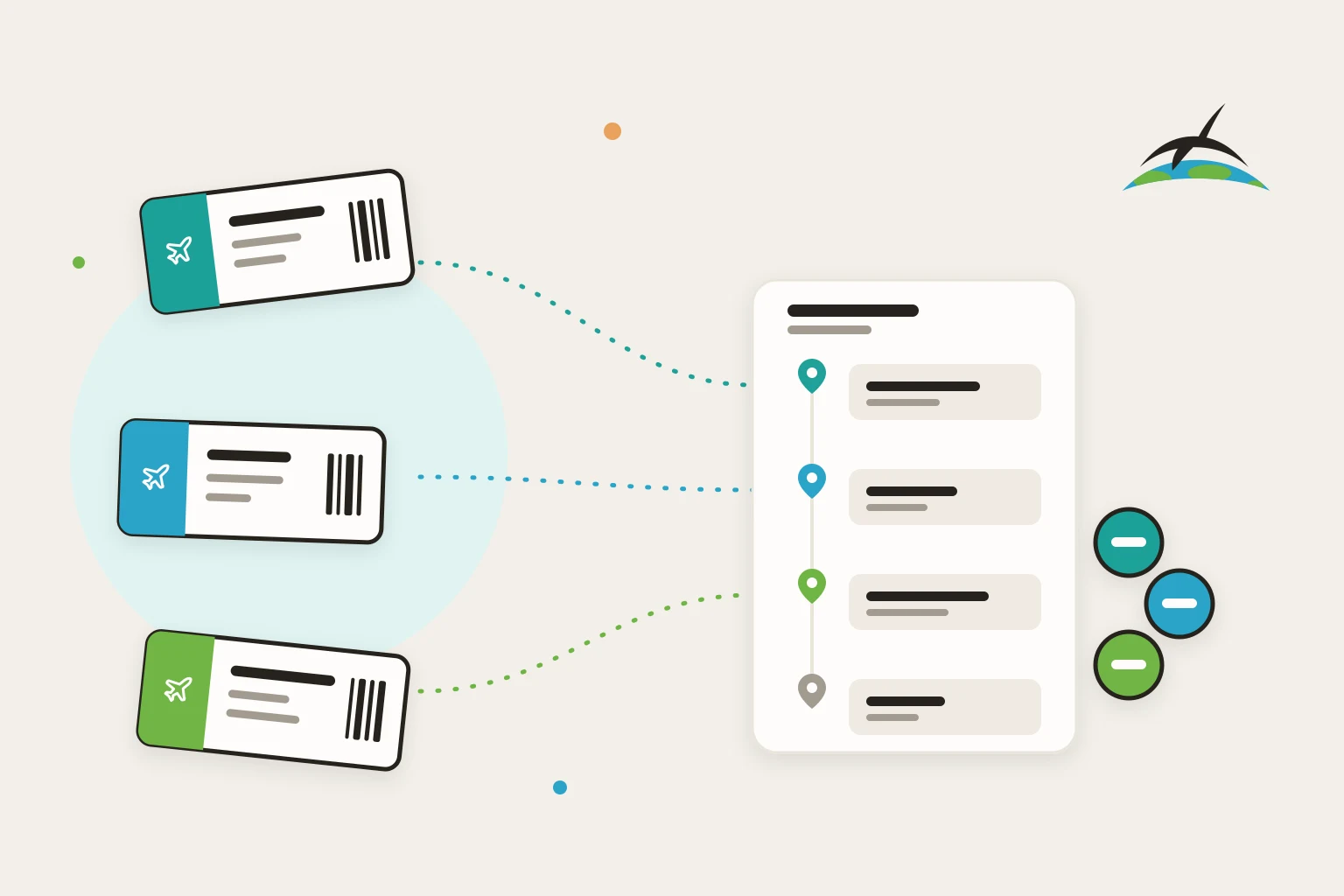
The fix is mechanical: one place every booking gets sent to, where it is filed on the right day with its confirmation number attached, and where everyone can see the result. A shared spreadsheet does this if someone is willing to retype every booking by hand. A shared itinerary built from the emails themselves does it without the retyping.
This is what Whimbrel is for. Each traveler forwards their own confirmations to the trip's address, or connects their Gmail, Outlook, or Fastmail so new bookings arrive on their own. An assistant reads each email, pulls out the dates, times, places, and confirmation numbers, and files it on the right day. The organizer invites everyone to the trip once, and from then on every booking anyone makes lands on the same timeline.
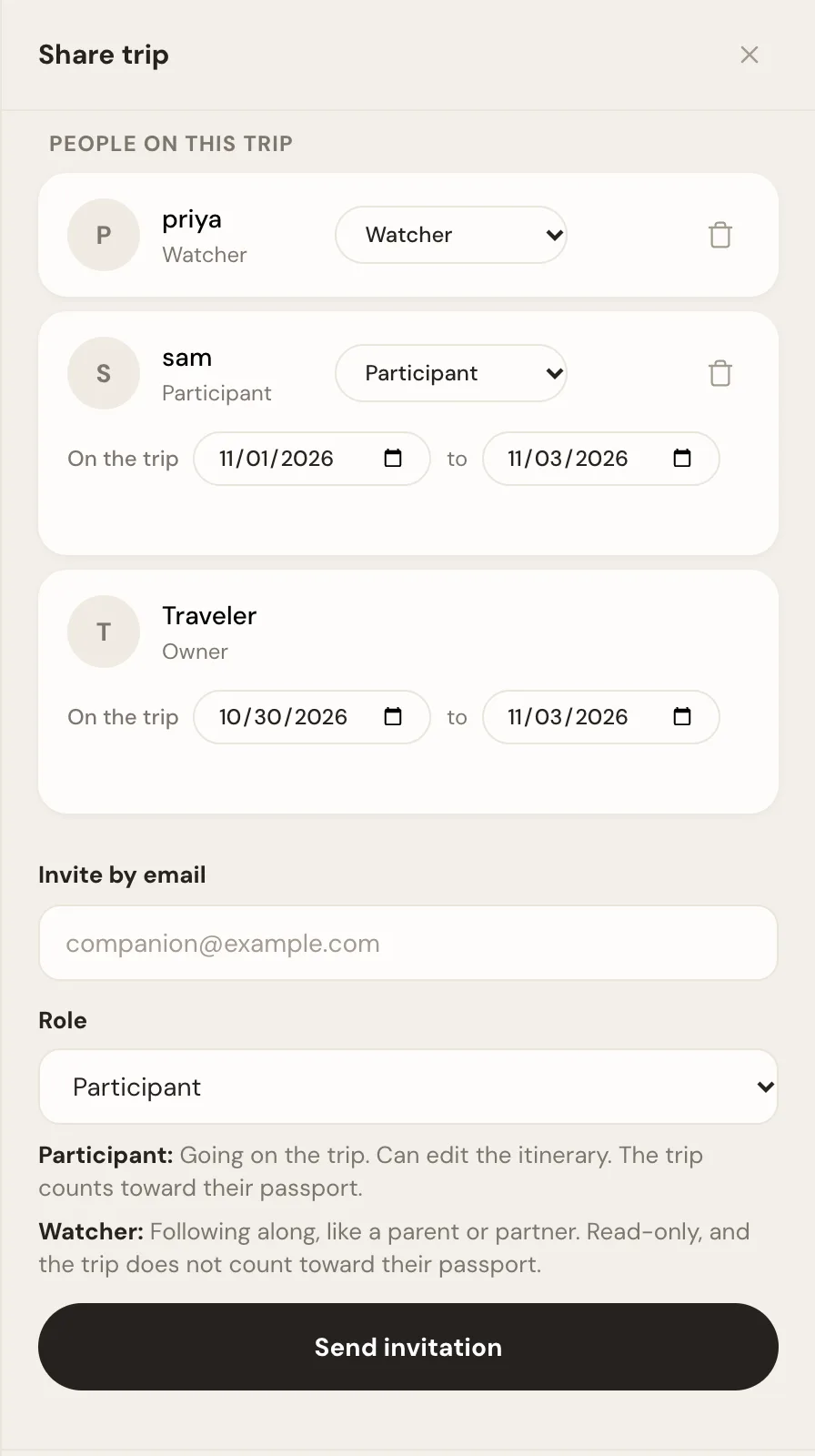
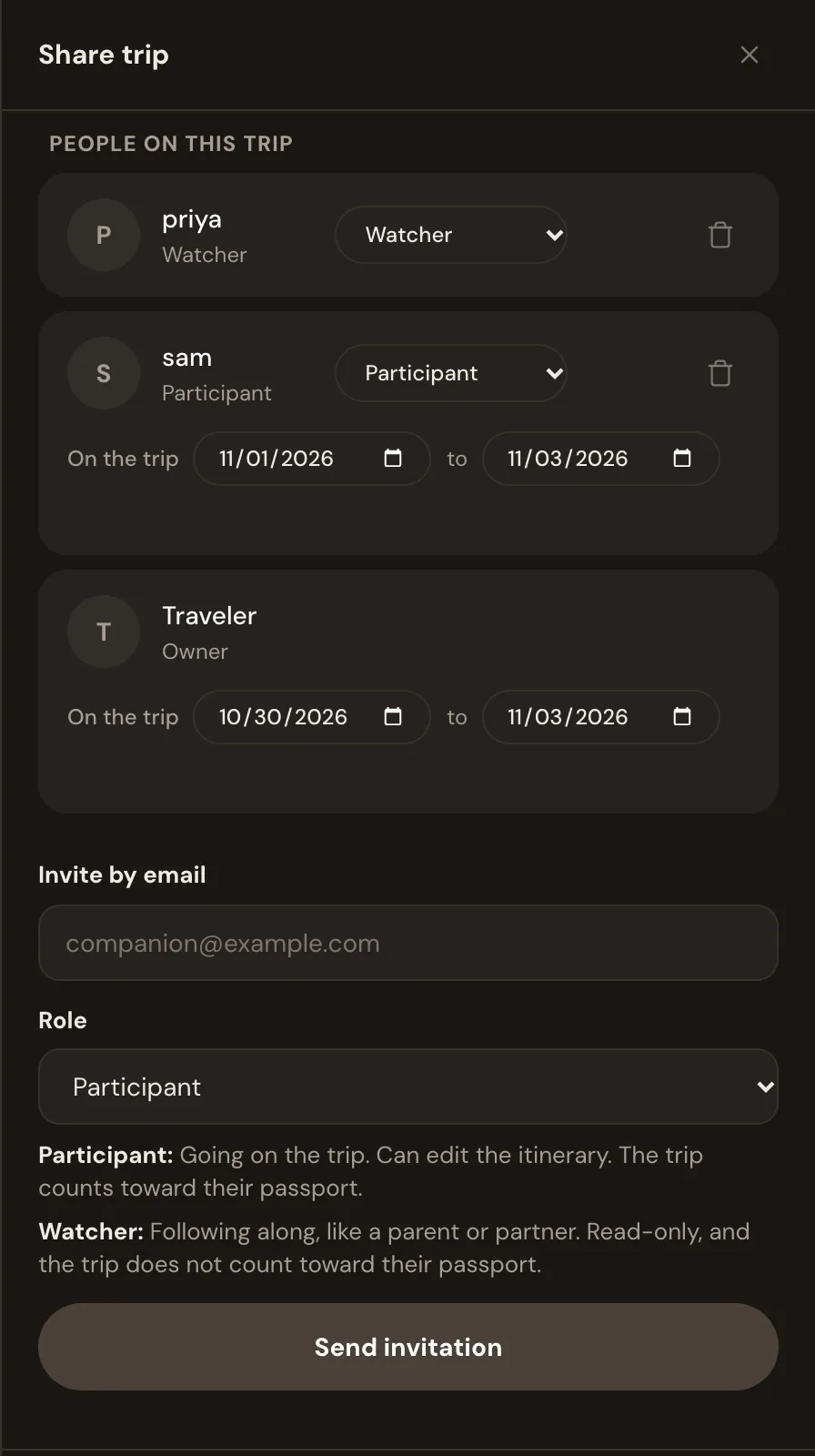
Two kinds of invitation matter here. The people coming on the trip are participants: they forward their own bookings and can edit the plan. The people who need to know but are not coming, a parent, a partner staying home, are watchers: they see everything and change nothing.
Whatever tool you use, the test is the same: can anyone in the group answer "when does Sam land?" without asking Sam? If the answer still lives in Sam's inbox, the timeline is not done. The how it works page shows what a trip built this way looks like from the first email.
Keep the itinerary honest for people on different days
Group trips rarely have one set of dates. Someone flies in Tuesday, someone has to leave Saturday morning, someone is tacking on two days in the city after. A single itinerary that pretends everyone is there the whole time is wrong for most of the group most of the time.
Two things fix this. Each traveler's own arrival and departure should live on the trip, so the itinerary knows that Tuesday's dinner is not for the person who lands Wednesday. And anything that is not for the whole group, the early hike three people signed up for, the dinner for the two who like fish, should say who it is for. In Whimbrel each person has their own dates on the trip, any item can be for some of the group rather than all of it, and you can view the trip as any one traveler to see only what is theirs.
Log money as it is spent, not after
The most common regret in every group-trip thread is the same one: nobody wrote anything down, and the week after the trip was spent going through bank statements trying to reconstruct who paid for the groceries on Wednesday.
Log each shared cost the day it happens, with a photo of the receipt. Not the night of, not on the flight home: at the table. Whimbrel's expense log does this for the whole trip. Turn it on, and anyone on the trip can add what they paid with a photo of the receipt, which fills in the amount and currency. Everyone sees the running list.
Whimbrel does not split those costs or work out who owes whom. For the settling up, use a splitting app alongside it, and decide before the trip whether shared costs split evenly or by who was there. Decide it before, because after is when it turns into a negotiation.
Leave room to split up
Not every meal is for everyone. Build in afternoons with nothing planned, mark the optional activities as optional, and say out loud that it is fine to skip things. The groups that come home still friends are the ones that spent a few hours a day apart.
The week before
Three things, and then stop planning.
- Check the arrivals. Look at the timeline for the first day and make sure every person's landing time is on it. The one that is missing is the one that will cause the problem.
- Share the dates with the people at home. A read-only link or a calendar feed means the parents and partners stop asking, and nobody has to forward the itinerary six times. Whimbrel publishes both from the trip, and the features page lists what else goes out with them.
- Put the to-do list where the group can see it. Who is bringing the speaker, who has the booking reference for the house, who is picking up the rental car. Shared to-dos and a packing list beside the plan mean the organizer is not the only one who knows.
Then leave it alone. A group trip that is planned past this point is a tour, and nobody wanted a tour.
Frequently asked questions
How far in advance should you plan a group trip?
Far enough that everyone can get the time off and the shared lodging is still available, which for most groups means setting dates three to six months out. Flights and the big shared booking should be done once the dates are set; the day-by-day plan can wait until the month before.
How do you plan a trip with friends who have different budgets?
Ask for everyone's ceiling before you pick a destination, and plan to the lowest number. Keep the shared costs, lodging and the one big activity, inside that number, and make everything else optional so the people with more to spend can add a nicer dinner or a spa afternoon without anyone else feeling obliged.
What is the best way to split costs on a group trip?
Decide the rule before anyone pays: evenly, or by who was there for each thing. Log every shared cost the day it happens with a receipt, in one place everyone can see. Settle at the end from the log, not from memory.
How do you keep everyone's bookings in one place?
Pick one place every confirmation gets sent to, and ask each traveler to send their own. A shared itinerary built from the confirmation emails, like Whimbrel, files each booking on the right day without anyone retyping it, and shows the whole group the same timeline.